



Adenosine A1 receptor (A1R)
Adenosine A1 receptor (A1R) mediates adenosine-sensitive cardiac and neural signaling through ligand-regulated receptor states and G-protein coupling[1][2]. Mechanistically, A1R activation inhibits isoproterenol-stimulated phospholamban phosphorylation in ventricular myocytes without reducing cAMP levels, linking A1R to selective control of cardiac phosphorylation responses[3]. In disease models, the A1R agonist PIA reduced infarct size in rabbits, while adenosine itself failed to reproduce this protection[4]. Compared with related isoforms, A1R mediates negative chronotropic activity, whereas A2 receptors mediate coronary vasodilator activity[5]. A1R also differs from A2AR in pharmacological models where dual A1/A2A antagonism improved motor impairment and cognitive deficits through separable receptor contributions[6]. For experimental applications, selective antagonists such as DPCPX and FSCPX support receptor identification, subtype discrimination, and irreversible A1R blockade in cardiac and brain membranes[1][7].
References:
- [1]. Alam MJ, et al. Catestatin reverses the hypertrophic effects of norepinephrine in H9c2 cardiac myoblasts by modulating the adrenergic signaling. Mol Cell Biochem. 2020 Jan;464(1-2):205-219. [Content Brief]
- [2]. Olah M, et al. Agonists and antagonists recognize different but overlapping populations of A1 adenosine receptors: modulation of receptor number by MgCl2, solubilization, and guanine nucleotides. J Neurochem. 1990 Oct;55(4):1432-8. [Content Brief]
- [3]. Gupta RC, et al. A1-adenosine receptor-mediated inhibition of isoproterenol-stimulated protein phosphorylation in ventricular myocytes. Evidence against a cAMP-dependent effect. Circ Res. 1993 Jan;72(1):65-74. [Content Brief]
- [4]. Hale SL, et al. An adenosine A1 receptor agonist, R(-)-N-(2-phenylisopropyl)-adenosine (PIA), but not adenosine itself, acts as a therapeutic preconditioning-mimetic agent in rabbits. Cardiovasc Res. 1993 Dec;27(12):2140-5. [Content Brief]
- [5]. Haleen SJ, et al. PD 116,948, a highly selective A1 adenosine receptor antagonist. Life Sci. 1987 Feb 9;40(6):555-61. [Content Brief]
- [6]. Mihara T, et al. Pharmacological characterization of a novel, potent adenosine A1 and A2A receptor dual antagonist, 5-[5-amino-3-(4-fluorophenyl)pyrazin-2-yl]-1-isopropylpyridine-2(1H)-one (ASP5854), in models of Parkinson's disease and cognition. J Pharmacol Exp Ther. 2007 Nov;323(2):708-19. [Content Brief]
- [7]. Frauman AG, et al. The A1 adenosine receptor antagonist 1,3, dipropyl-8-cyclopentylxanthine (DPCPX) displays adenosine agonist properties in the FRTL5 thyroid cell line. Biochem Biophys Res Commun. 1989 Feb 28;159(1):355-62. [Content Brief]
All Product Categories
-
Adenosine A1 receptor (A1R) Inhibitors
(5)
View all products
-
Adenosine A1 receptor (A1R) Agonists
(13)
View all products
-
Adenosine A1 receptor (A1R) Antagonists
(29)
View all products
-
Adenosine A1 receptor (A1R) Modulator
(1)
View all products
-
Adenosine A1 receptor (A1R) Ligand
(1)
View all products
-
Adenosine A1 receptor (A1R) Related Products (51)
Related Products (51)

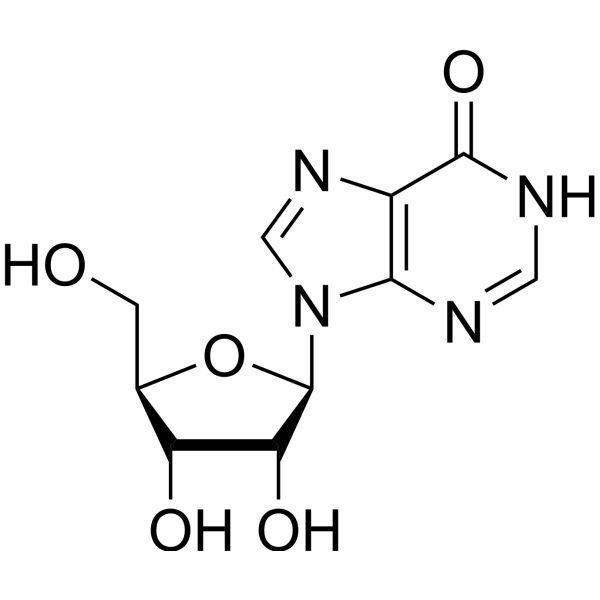
-
CCPA
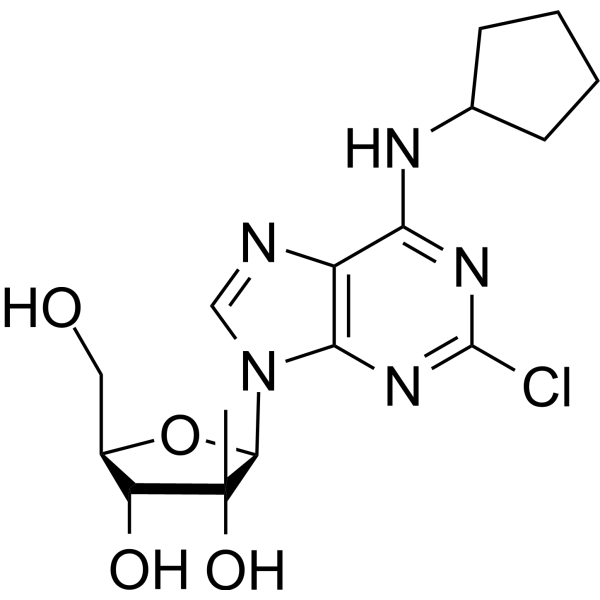
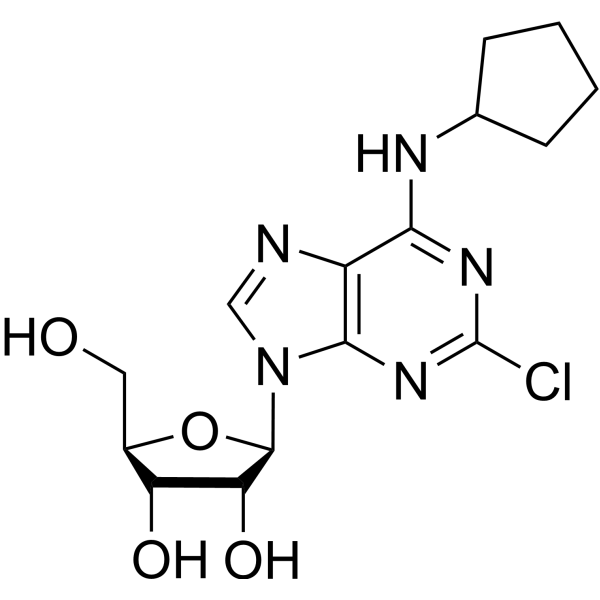 0 ImagesSynonyms: 2-Chloro-N6-cyclopentyladenosineCCPA (2-Chloro-N6-cyclopentyladenosine) a highly selective A1 adenosine receptors agonist with a Ki of 0.4 nM. CCPA inhibits adenylate cyclase with an IC50 of 33 nM. CCPA exhibits anti-seizure and cardiacprotective activity. CCPA can be used for the research of seizure and myocardial infarction.
-
Derenofylline
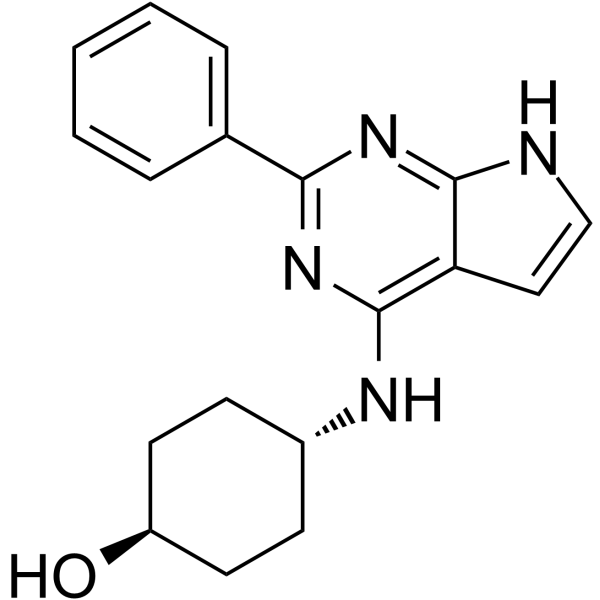 0 ImagesSynonyms: SLV 320Derenofylline (SLV 320) is a potent, selective and orally active adenosine A1 receptor antagonist, with Ki values of 1 nM, 200 nM and 398 nM for human A1, A3 and A2A receptors respectively. Derenofylline suppresses cardiac fibrosis and attenuates albuminuria without affecting blood pressure in rats.
-
PSB36
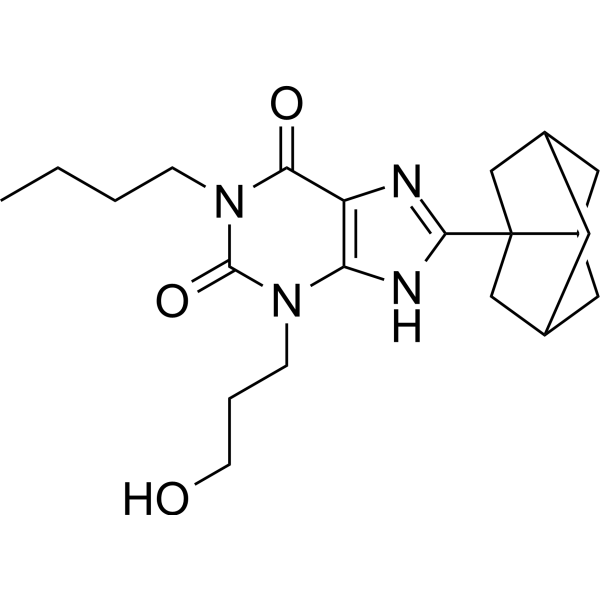 0 ImagesPSB36 is a highly selective A1 adenosine receptor antagonist, with a Ki of 0.12 nM and a Kd of 0.7 nM. Systemic administration of PSB36 reduces formalin- and Carrageenan (HY-125474)-induced edema in mice and decreases pain-related behaviors, with no local paw activity. PSB36 prolongs the APD90 of rat and human atria, produces a frequency-dependent prolongation of rat atrial ERP, increases the diastolic threshold of rat atria, and shortens the duration of atrial fibrillation episodes. PSB36 can be used in research related to inflammatory pain, inflammatory hyperalgesia, edema and atrial fibrillation.
-
NBUMP
 0 ImagesCat. No.: HY-115525CAS No.: 1348755-27-0NBUMP is a 5-HT1A receptor ligand with a 5-HT1A receptor Ki of 0.1 nM, α1-adrenergic receptor Ki of 46 nM, and a 5-HT1A receptor-to-α1-adrenergic receptor selectivity ratio of 460.NBUMP binds to the 5-HT1A receptor with high affinity.NBUMP binds to the α1-adrenergic receptor with lower affinity.
-
KF20274
 0 ImagesCat. No.: HY-182340CAS No.: 143394-68-7KF20274 is an orally active adenosine A1 receptor antagonist. KF20274 increases the fecal pellet output in rats, and does not affect small intestinal propulsion or gastric emptying at defecation-increasing doses. KF20274 does not induce diarrhea at defecation-increasing doses. KF20274 can be used for the research of constipation.
-
MDL-102234
 0 ImagesCat. No.: HY-182518CAS No.: 137766-81-5
-
MIPS521
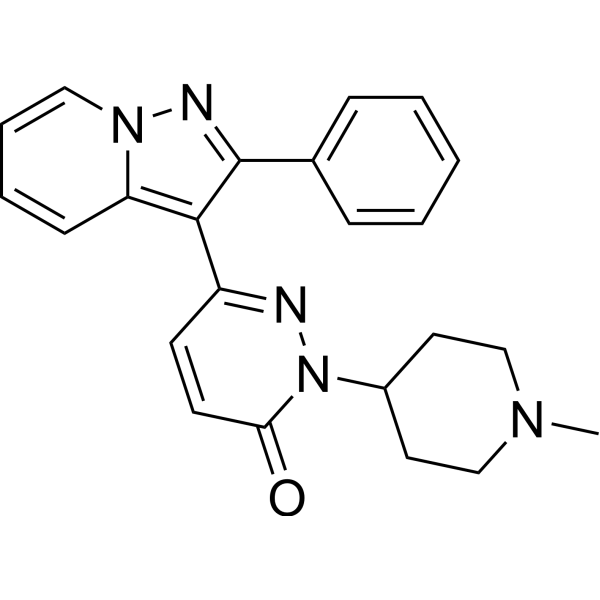
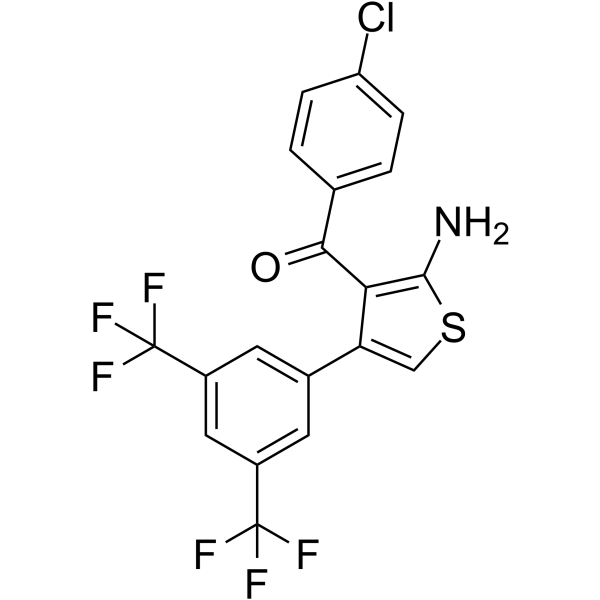 0 ImagesMIPS521 is a positive allosteric modulator of adenosine A1 receptor (A1AR). MIPS521 also has a lower A1R allosteric affinity (pKB=4.95; KB=11 μM). MIPS521 exhibits pain-relieving effects in vivo through modulation of the increased levels of endogenous adenosine.
-
Adenosine receptor inhibitor 1
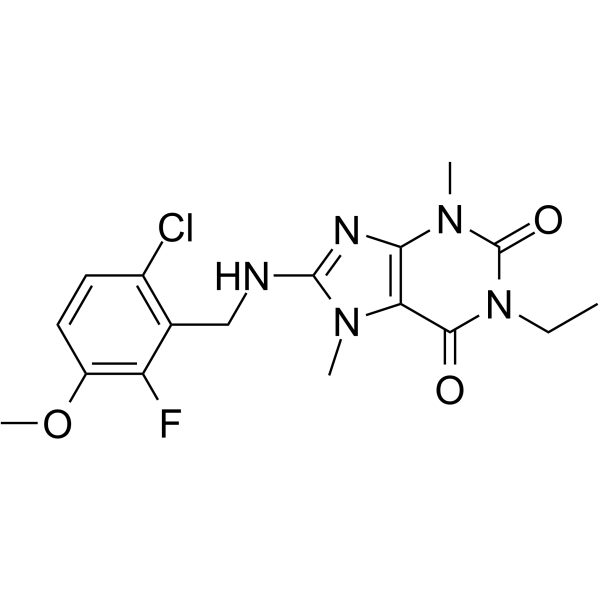 0 ImagesAdenosine receptor inhibitor 1 is a potent and selective adenosine receptor (AR) inhibitor with Ki values of >1000, 68.5, >1000, >1000 nM for A1AR, A2AAR, A2BAR, A3AR, respectively. Adenosine receptor inhibitor 1 shows antinociceptive activity, anti-inflammatory effect and peripheral analgesic effect. Adenosine receptor inhibitor 1 has the potential for the research of cancer or neurodegenerative diseases.
-
TAT-GluA2 3Y
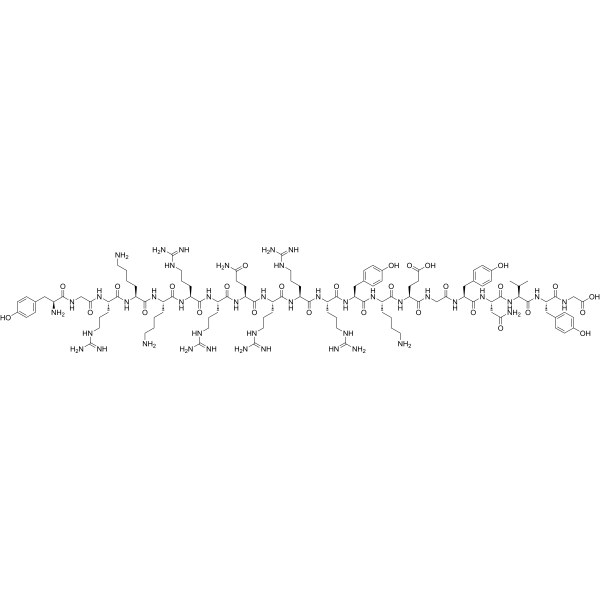 0 ImagesTAT-GluA2 3Y is a blood-brain barrier-permeable AMPA receptor inhibitory peptide that crosses cell membranes via the HIV-1 TAT protein domain. TAT-GluA2 3Y blocks the endocytosis of AMPA receptors, including the internalization of GluA1/GluA2 subunits, by disrupting interactions with the AP2, Brag2 and Syt3-GluA2 complexes, while also inhibiting long-term depression. TAT-GluA2 3Y blocks hypoxia-mediated AMPAR internalization, alleviates A1R-induced persistent synaptic inhibition, and reduces cerebral ischemic volume, neurological deficits and spatial memory deficits. TAT-GluA2 3Y blocks the effect of NLRP3 deficiency on fear generalization, inhibits amphetamine-induced behavioral/neurochemical sensitization, weakens the unconditioned stimulus-conditioned stimulus association of morphine, and promotes the extinction of morphine CPP. TAT-GluA2 3Y can be used in studies related to fear generalization, ischemic stroke, hypoxia, drug addiction and opioid addiction.
-
Adenosine receptor inhibitor 2
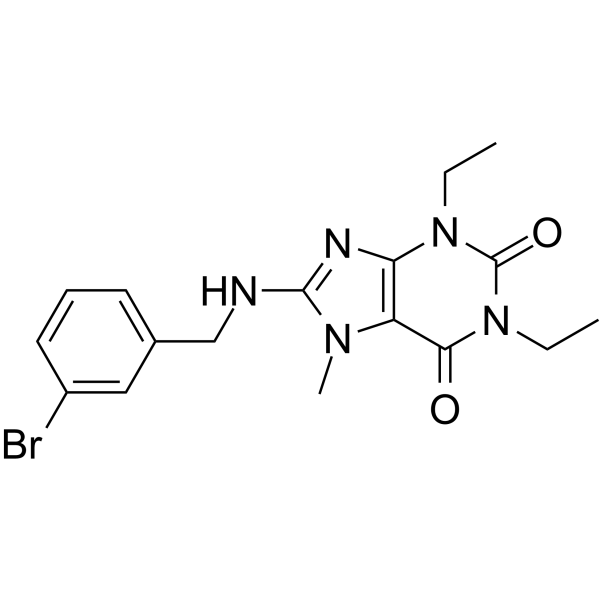 0 ImagesAdenosine receptor inhibitor 2 (compound 14b) is a potent AR (adenosine receptor) inhibitor. Adenosine receptor inhibitor 2 shows dual affinity toward A1/A2A ARs with higher affinity for the A1- than the A2AAR. Adenosine receptor inhibitor 2 has Ki values of 52.2 nM for the A1AR and 167 nM for the A2AAR.
-
MRS1334
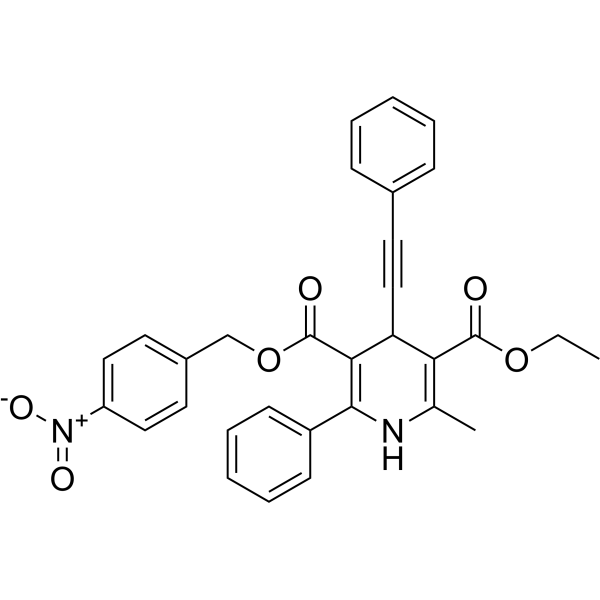 0 ImagesMRS1334 is a potent and selective human adenosine A3 receptor antagonist with Kis of 2.69 nM, >100 nM, >100 nM for hA3, rA1, rA2A, respectively. MRS1334 blocks the protective effect of Cl-IB-MECA leading to significant bradycardia and elevated ST segment. MRS1334 is a click chemistry reagent, it contains an Alkyne group and can undergo copper-catalyzed azide-alkyne cycloaddition (CuAAc) with molecules containing Azide groups.
-
LUF5834
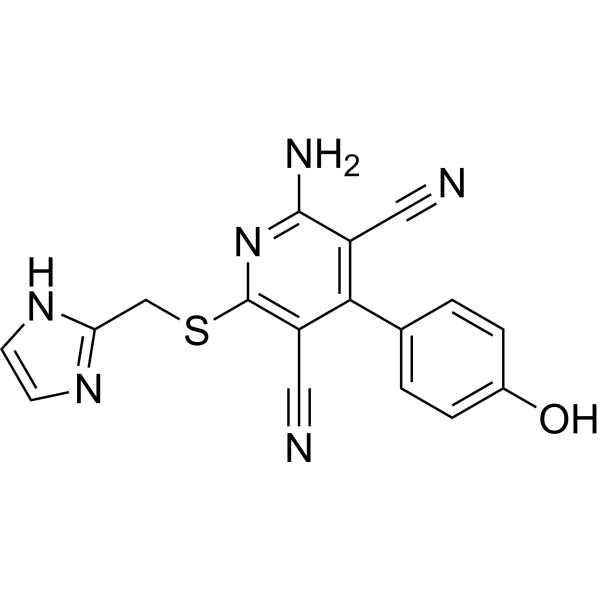 0 ImagesLUF5834 is a selective A2B adenosine receptor (A2BR) partial agonist (EC50 = 12 nM). LUF5834 is also a partial A1/A2A adenosine receptor agonist (lacking selectivity) with Ki values of 2.6 and 28 nM, respectively.
-
A1AR antagonist 6
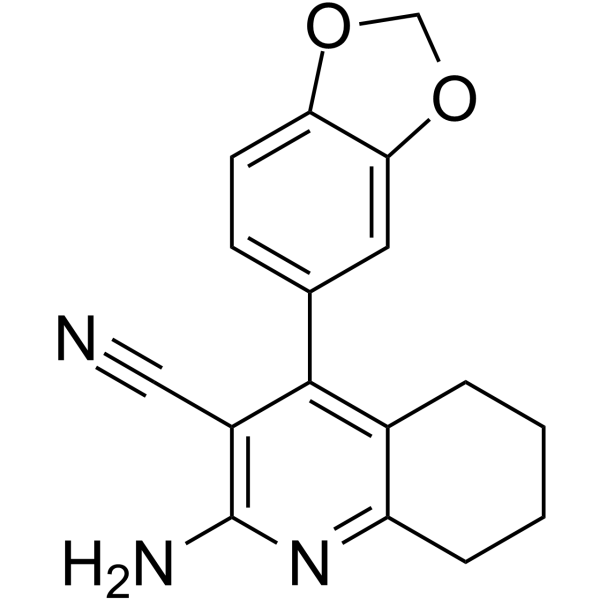 0 ImagesA1AR antagonist 6 (compound 15) is a potent and selective A1AR (A1 adenosine receptor) antagonist, with a pIC50 of 6.38 and a pKi of 7.13.
-
DMPX
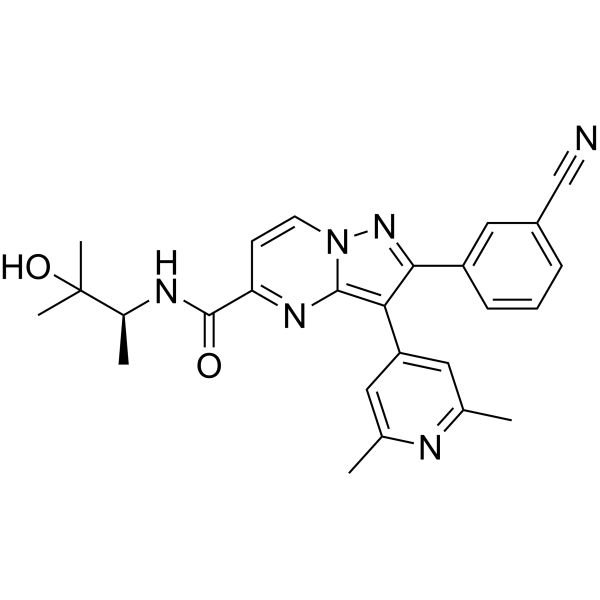
 0 ImagesSynonyms: 3,7-Dimethyl-1-propargylxanthineDMPX (3,7-Dimethyl-1-propargylxanthine) is a selective A2A adenosine receptor (A2A AR) antagonist that crosses the blood-brain barrier, with a Ki of 11 μM for rat A2 adenosine receptor and a Ki of 45 μM for rat A1 adenosine receptor. By blocking A2A receptors in specific brain regions, DMPX protects dopaminergic and GABAergic neurons from mitochondrial dysfunction. DMPX is applicable to research related to depression, Parkinson's disease and Huntington's disease.
-
2-Chloro-3-deazaadenosine
 0 ImagesCat. No.: HY-W777125CAS No.: 40656-71-12-Chloro-3-deazaadenosine is agonists for adenosine receptor, with Kis of 0.3, 0.08, 25.5 and 1.9 μM, for A1, A2A, A2B, and A3 receptors, respectively.
-
A1AR antagonist 5
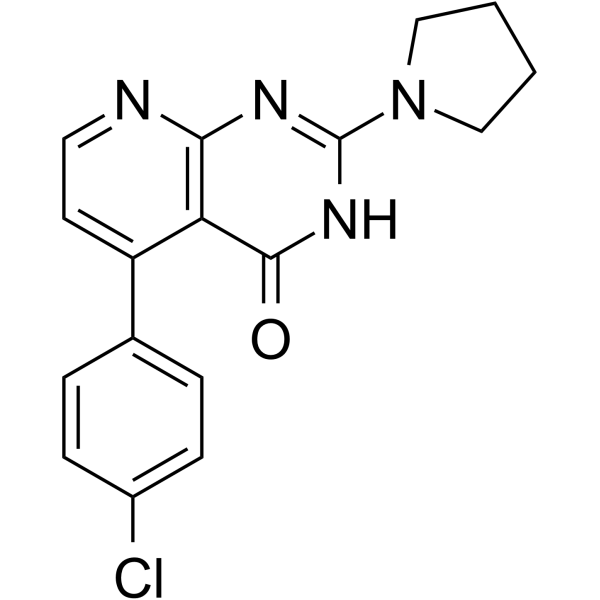 0 ImagesCat. No.: HY-147544CAS No.: 1030509-01-3A1AR antagonist 5 (compound 20) is a potent and selective A1AR (A1 adenosine receptor) antagonist, with a pIC50 of 5.83 and a pKi of 6.11.



